
The Duke Endowment: Kinship Care
Finding the Story: Kinship Care & Navigation
Documentary Storytelling + Advocacy Communications + Child & Family Well-Being
The Story
Sometimes the hardest part of producing a story isn’t capturing the interviews, traveling to the locations or sitting in the edit bay. Sometimes the hardest part is finding the story.
In early 2026, The Duke Endowment asked Rettew Creative to help tell the story of kinship care and kinship navigation in South Carolina. The project was part of the Endowment’s broader advocacy and communications strategy focused on increasing understanding of evidence-based programs, implementation science and child welfare improvements that can strengthen outcomes for children and families.
Advancing kin-first strategies was an important part of that work. The goal was to help audiences understand why kinship care matters, how kinship navigation supports caregivers, how South Carolina was implementing the Foster Kinship Navigator Model, and what could be learned through continued implementation, evaluation and investment.
From the beginning, the film was intended to become part of a larger communications strategy. The Endowment planned to share the story during the summer, incorporate it into its Policy Pulse communications and use it to help advance conversations about kinship caregiving throughout the year.
We knew the policy story. We knew the organizations doing the work. We knew the experts who could explain it. What we didn’t know yet was whose story would allow an audience to understand why any of it mattered.
The Challenge
Moving Beyond Information to Find the Human Story
We began by listening to the people closest to the work. We interviewed leaders from the South Carolina Department of Social Services and The Duke Endowment’s Child & Family Well-Being team, then traveled across South Carolina to spend time with HALOS, Epworth Children’s Home and Middle Tyger Community Center—the three organizations implementing kinship navigation in the state.
Each organization brought an important perspective. The South Carolina Department of Social Services could explain the state’s vision for kinship care and why expanding support for caregivers matters. The Duke Endowment could articulate why kin-first strategies are important to improving outcomes for children and families. HALOS, Epworth and Middle Tyger could show what navigation looks like on the ground, helping caregivers identify financial resources, legal assistance, counseling, support groups and other services while navigating systems that can be incredibly difficult to understand.
The interviews were thoughtful. The information was strong. The policy case was clear.
Then we started editing.
The film could explain kinship care. It could explain navigation. It could explain implementation, resources and the importance of supporting caregivers. But it couldn’t yet show an audience what any of those things felt like.
We didn’t have the family.
Finding a family willing to participate became one of the most difficult parts of the project. Kinship care often begins during a family crisis. A grandparent, relative, family friend or another trusted adult may suddenly find themselves responsible for a child who can no longer safely remain with a parent. Behind that transition can be trauma, financial hardship, legal challenges and complicated family relationships. Most importantly, there are children whose privacy and dignity must be protected.
Asking a caregiver to appear on camera can mean asking someone to open a deeply personal part of their family’s life to people they have never met.
So we kept asking, while respecting why someone might not be ready to say yes.
The Approach
Staying Committed to the Search
The possibility of interviewing a kinship family had been contemplated in The Duke Endowment’s original project brief. If needed for the storytelling, the plan allowed us to work with one of the navigation providers to identify a family that had experienced kinship care firsthand.
As the early edits developed, it became increasingly clear that we needed that voice.
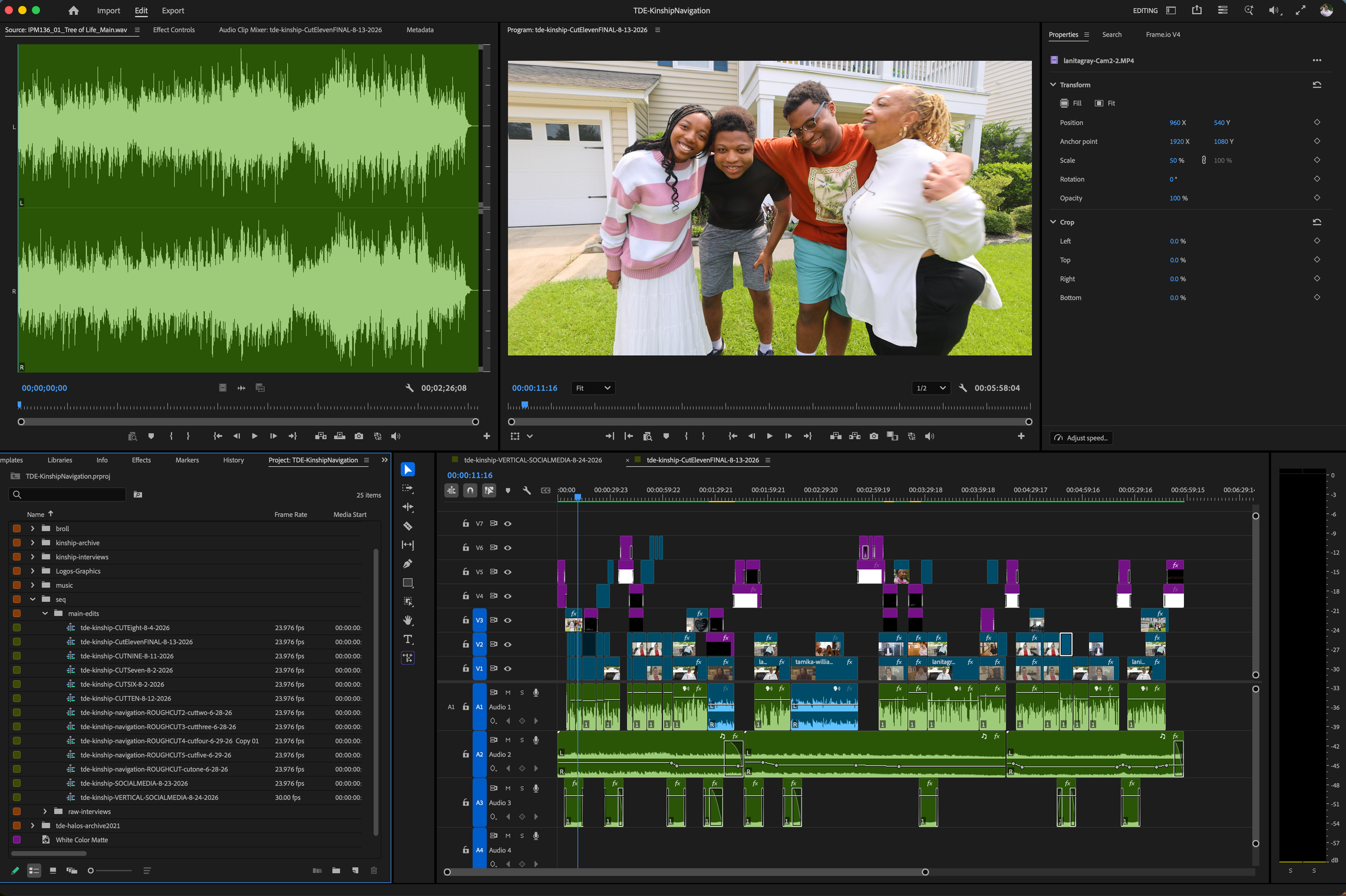
We continued reaching out to the organizations involved in the project, looking for a caregiver willing to talk and a family comfortable allowing us into their world. Meanwhile, the editing continued. Interviews were rearranged. Openings were reconsidered. Explanations were refined. The Duke Endowment team and Rettew Creative continued working through how the story might come together.
We could have finished an informative video with what we had. It would have communicated the model, introduced the providers and explained the policy rationale.
But we weren’t convinced we had found the story we needed to tell.
So we kept looking.
As the deadline grew closer, we went back into the archives and revisited an older kinship story Rettew Creative had produced several years earlier. That led to another conversation with HALOS about whether a previous caregiver might still be involved in kinship care and willing to participate.
Instead, HALOS came back with another possibility.
They had found someone.
Her name was Lanita Gray.
The Breakthrough
When the Policy Became Personal
After months of searching, we suddenly had a kinship caregiver willing to share her experience. With the communications timeline moving quickly, there wasn’t much time to deliberate about logistics. We cleared the production schedule, loaded the gear and traveled to Charleston.
Lanita wanted to speak honestly about her experience, but she didn’t want to have that conversation around her grandchildren. That was important. If she was going to talk openly about becoming a kinship caregiver, the challenges her family had experienced and what it meant to raise her grandchildren, she needed a space where she could speak freely.
We decided to meet in a park, which offered a more natural and comfortable setting than an office or conference room. Of course, documentary production rarely cooperates completely with the plan. It was hot, landscaping crews were cutting grass throughout the park, and every time we thought we had found a quiet location, the noise seemed to follow us. We moved, waited and moved again until we eventually found enough shade and enough quiet beneath a tree to begin the conversation.
Then Lanita started talking.
She shared that she had always wanted to be a grandparent. What she had not expected was to become a parent again later in life.
That simple distinction gave the entire project a human center.
Lanita talked about raising her grandchildren, the financial realities of caring for children while living on a fixed income, and the sacrifices she and her husband were willing to make because their grandchildren needed them. She also described the practical support her family received through HALOS, including help with school supplies, clothing, summer camp and other needs that can create significant pressure for kinship caregivers.
But her story was about much more than resources. Lanita talked about the importance of children having someone they already know and trust when their lives have been disrupted. She talked about showing her grandchildren that they mattered and providing the stability and love they needed during a difficult time.
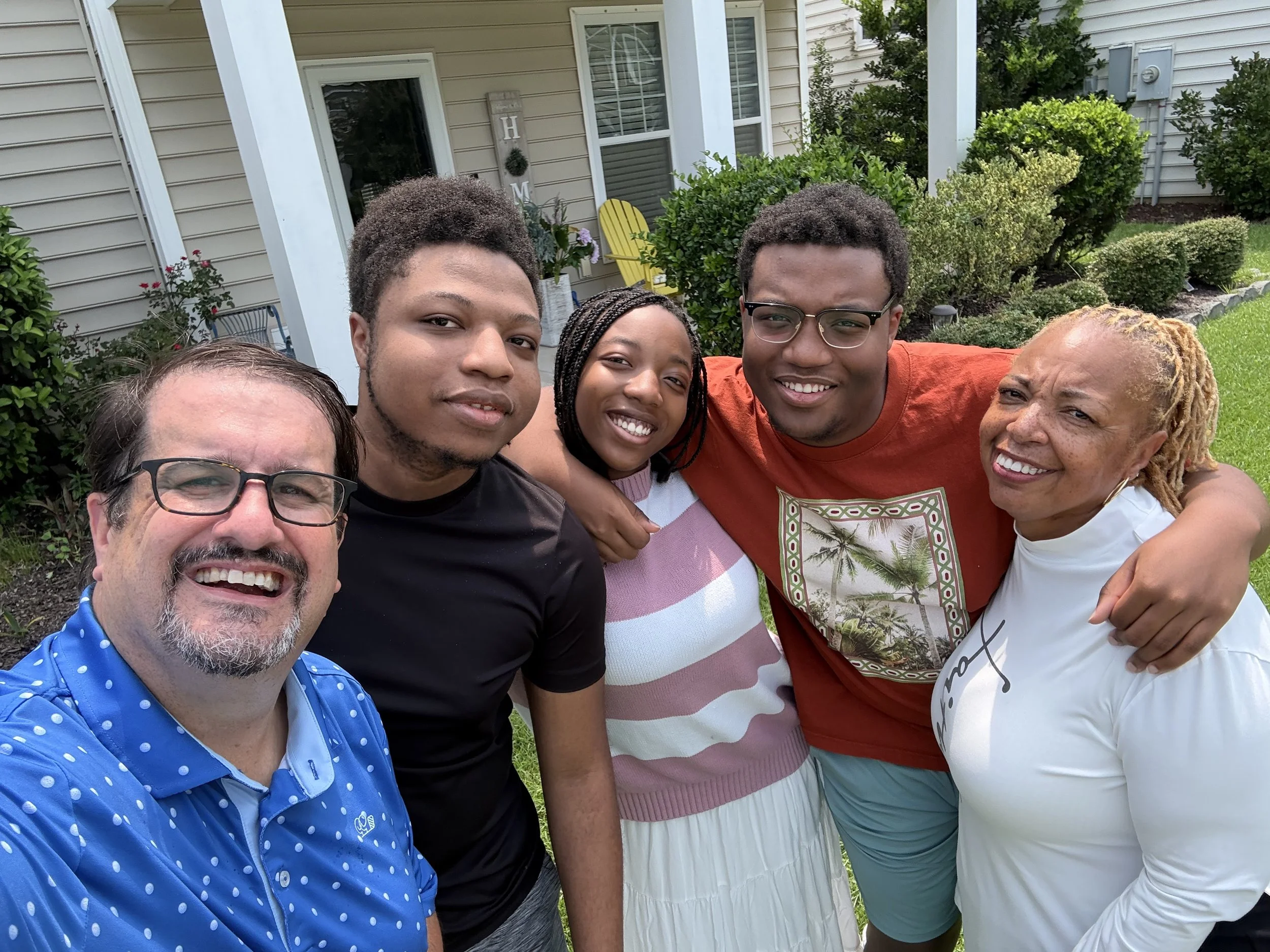
After the interview, Lanita invited us to her home, where we were able to meet her family and capture the imagery the project had been missing. We could see the relationships, personalities, laughter and ordinary interactions that make a family a family.
Suddenly, words we had been using for months—stability, permanency, support and kinship—were no longer abstractions.
The policy had become personal.
The Breakthrough
When the Policy Became Personal
After months of searching, we suddenly had a kinship caregiver willing to share her experience. With the communications timeline moving quickly, there wasn’t much time to deliberate about logistics. We cleared the production schedule, loaded the gear and traveled to Charleston.
Lanita wanted to speak honestly about her experience, but she didn’t want to have that conversation around her grandchildren. That was important. If she was going to talk openly about becoming a kinship caregiver, the challenges her family had experienced and what it meant to raise her grandchildren, she needed a space where she could speak freely.
We decided to meet in a park, which offered a more natural and comfortable setting than an office or conference room. Of course, documentary production rarely cooperates completely with the plan. It was hot, landscaping crews were cutting grass throughout the park, and every time we thought we had found a quiet location, the noise seemed to follow us. We moved, waited and moved again until we eventually found enough shade and enough quiet beneath a tree to begin the conversation.
Then Lanita started talking.
She shared that she had always wanted to be a grandparent. What she had not expected was to become a parent again later in life.
That simple distinction gave the entire project a human center.
Lanita talked about raising her grandchildren, the financial realities of caring for children while living on a fixed income, and the sacrifices she and her husband were willing to make because their grandchildren needed them. She also described the practical support her family received through HALOS, including help with school supplies, clothing, summer camp and other needs that can create significant pressure for kinship caregivers.
But her story was about much more than resources. Lanita talked about the importance of children having someone they already know and trust when their lives have been disrupted. She talked about showing her grandchildren that they mattered and providing the stability and love they needed during a difficult time.
After the interview, Lanita invited us to her home, where we were able to meet her family and capture the imagery the project had been missing. We could see the relationships, personalities, laughter and ordinary interactions that make a family a family.
Suddenly, words we had been using for months—stability, permanency, support and kinship—were no longer abstractions.
The policy had become personal.
The Outcome
A Human Story Inside a Larger Advocacy Strategy
The finished film was never intended to stand alone. From the original project brief, The Duke Endowment envisioned the video as a communications asset within a broader advocacy strategy around kinship care.
That strategy became visible when the film was released in August 2026 through The Duke Endowment’s Policy Pulse: Child & Family Well-Being, leading into National Kinship Care Awareness Month in September.
The Policy Pulse placed Lanita’s story within a larger conversation about keeping children safely connected to family and community. It highlighted efforts to strengthen kinship care in North Carolina and South Carolina and discussed opportunities to reduce barriers for caregivers, sustain and expand kinship navigation programs, improve data transparency and strengthen the concrete and economic support available to families.
Importantly, the communication moved beyond awareness to action. Readers were encouraged to examine kin-first policies and practices, support kinship navigator programs and continue listening to people directly affected by kinship care.
The film had become what it was always intended to be: a human story working inside a larger advocacy and communications strategy.
Soon after its release, The Duke Endowment shared feedback from HALOS Executive Director Jed Dews. He reported that people were already reaching out with questions about things they had seen in the piece. The film wasn’t simply being watched; it was creating curiosity and opening doors to further conversation.
But another part of his response captured a different kind of impact.
Lanita had a big smile on her face as she showed the finished story to her children.
That matters in documentary storytelling.
The people who trust us with their experiences should be able to recognize themselves in the finished work. They should feel that we listened, that their story was represented with dignity and that the finished piece belongs to them as much as it serves the communications goals of the organization that commissioned it.
The Takeaway
Finding the Story Is Part of the Work
This project reinforced something we have believed throughout our work at Rettew Creative: storytelling is not the same thing as content production.
A production team can schedule interviews, gather experts, capture beautiful images, explain a program and satisfy every talking point in a communications brief—and still not have a story.
Documentary storytelling sometimes requires more. It requires patience, trust, collaboration and the willingness to recognize when the first approach isn’t working. It requires continuing to ask questions when it would be easier to finish the edit. And it requires a client willing to stay committed to that process.
The Duke Endowment gave us room to keep searching. The organizations implementing kinship navigation continued helping us look. Lanita Gray and her family ultimately trusted us enough to let us into their lives. Together, those relationships allowed the project to become something stronger than the informational film we could have finished earlier in the process.
The original assignment asked us to communicate the value of implementation, evaluation and investment in kinship care. The breakthrough came when we found a family who could show audiences what those ideas mean in someone’s life.
Sometimes the most important part of telling a story is being willing to keep searching until you find it.
Project Partners
The Duke Endowment — Child & Family Well-Being
South Carolina Department of Social Services
Lanita Gray and Family
Documentary Storytelling + Production: Rettew Creative
