
Celebrating Legacy Through Intentional Storytelling
2026 Clemson Athletic Hall of Fame | Rettew Creative Case Study
The Challenge: Honoring Tradition While Reimagining the Experience
On September 11, 2026, Clemson Athletics and the Block C Club gathered to celebrate the newest members of the Clemson Athletic Hall of Fame. The evening represented more than an annual induction ceremony. It was an opportunity to honor athletic excellence, celebrate the relationships that shaped extraordinary careers, and create a meaningful experience for inductees, families, and the Clemson community.
The date carried additional significance. As the nation marked the 25th anniversary of the September 11 terrorist attacks, the production team recognized the responsibility of acknowledging this moment in American history while maintaining the celebratory purpose of the evening.
Clemson's heritage as a military college helped inform the creative direction. Rather than building the evening around the university's familiar orange, the visual environment emphasized rich purple and gold, with carefully placed accents of orange. A moment of silence was incorporated into the program, creating space for remembrance before returning attention to the inductees.
This balance between remembrance and celebration became an important expression of the evening's larger philosophy: every element of the experience should have a purpose.
Designing a New Experience in a New Space
The 2026 ceremony introduced a significant change of venue, moving into the Otis Pavilion near Clemson's Walker Golf Course and Madren Center.
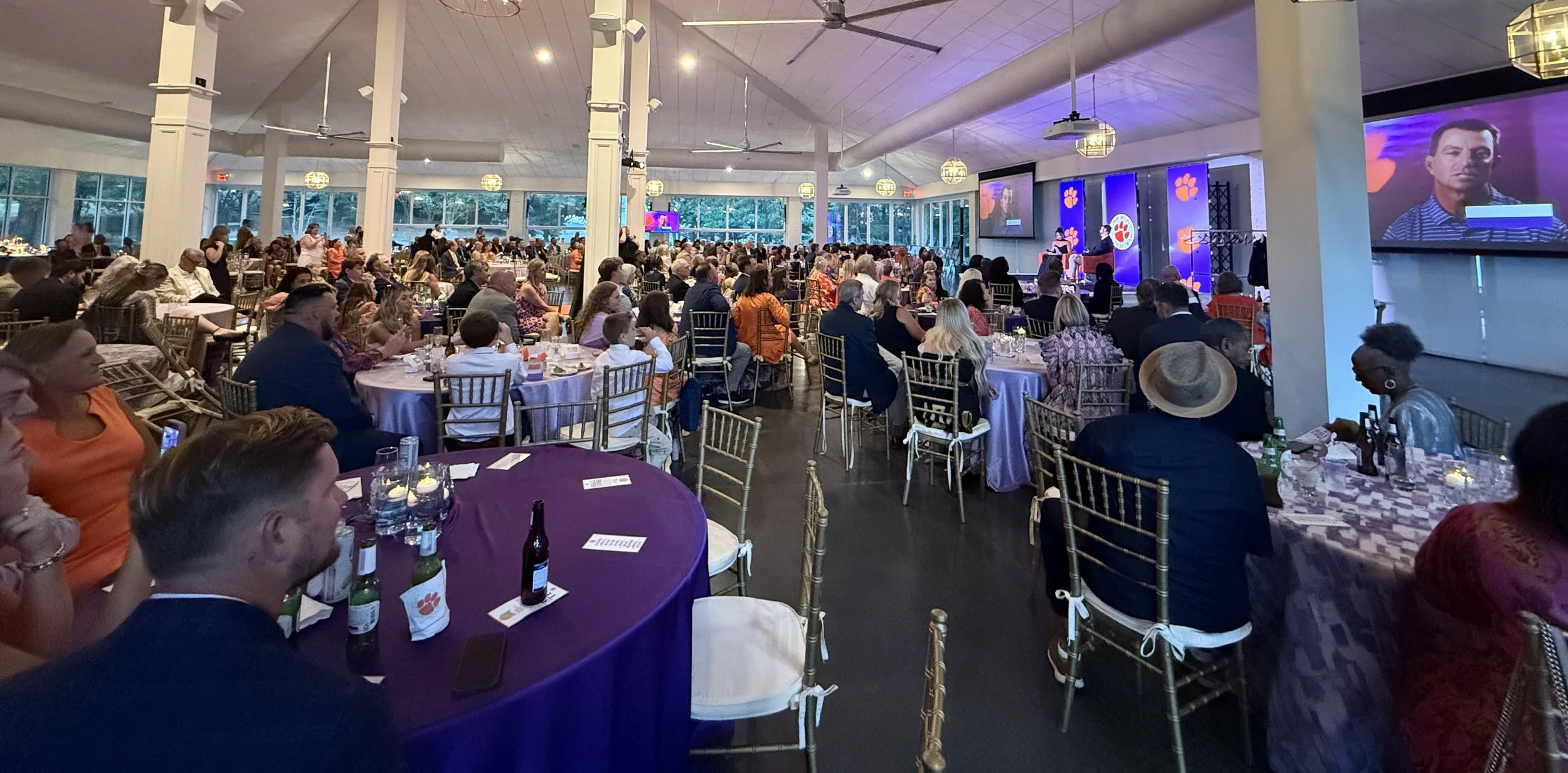
The pavilion offered a striking architectural environment, with expansive windows, movable glass walls, and views extending beyond the event space. Yet its open design also presented challenges for staging, audience sightlines, lighting, and audiovisual production.
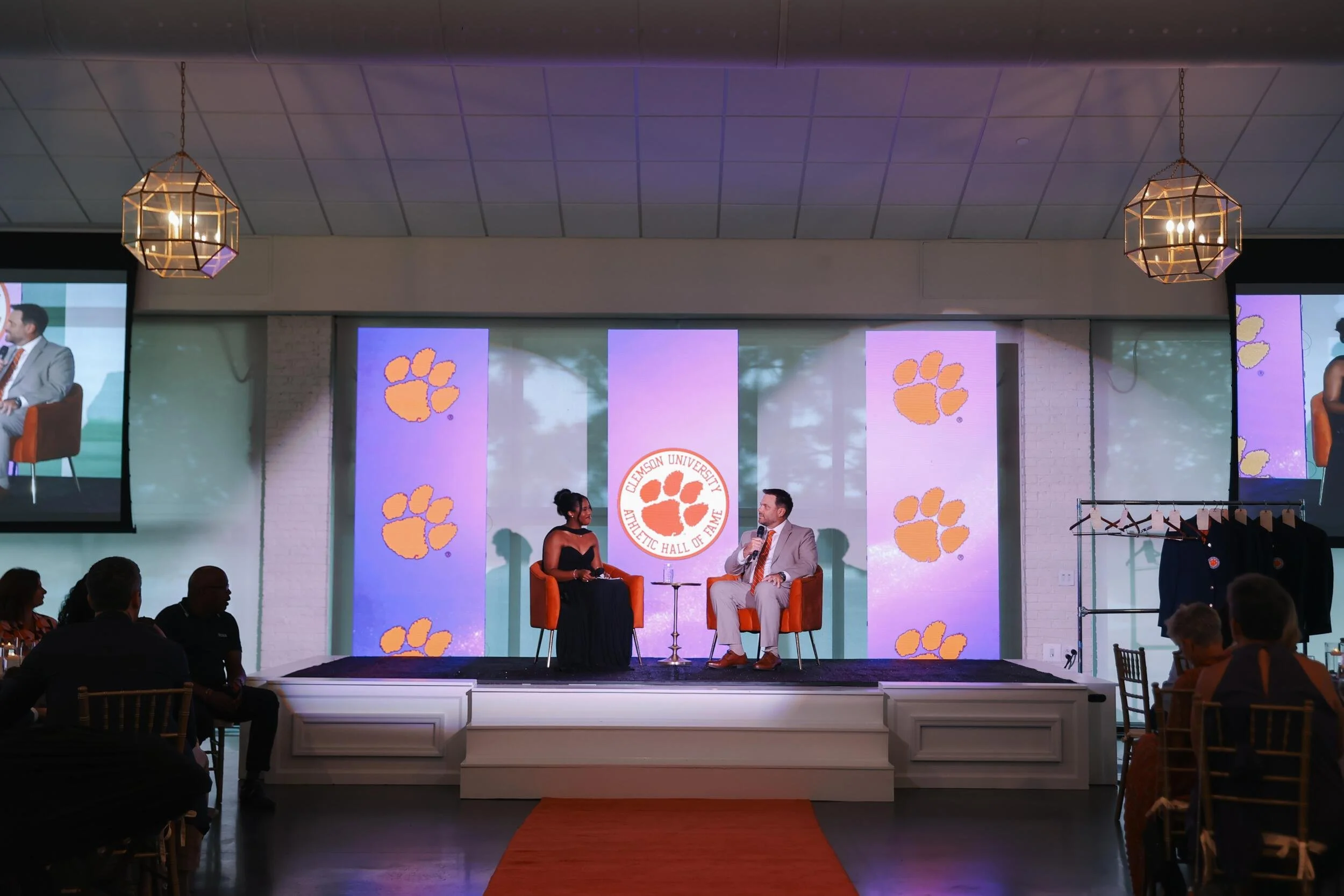
Several configurations were considered, including placing the stage in the center of the room. Ultimately, the team selected a traditional stage position at the rear of the pavilion, allowing the production to establish a clear visual focal point while preserving the openness and beauty of the surrounding environment.
Adjustable window shades provided additional flexibility as the natural light changed throughout the evening.
The design also introduced a more formal dining experience. Thoughtful selections of table coverings, glassware, seating, and decorative details elevated the atmosphere without sacrificing the warmth and hospitality associated with Clemson.
A central orange-carpet runway created a distinctive processional experience, giving inductees an opportunity to walk through the audience as they approached the stage.
The result was an environment that felt both expansive and intimate, formal yet conversational.
Technology That Supported the Story
A new audiovisual production partnership introduced opportunities to enhance the visual presentation while maintaining a restrained and elegant production style.
Three LED media walls formed the primary visual backdrop behind the stage, complemented by two elevated audience screens. Rather than filling every surface with moving graphics and visual effects, the production emphasized simplicity, texture, consistency, and carefully selected media.
The stage itself was designed to support conversation.
The goal was not to create a technological spectacle. It was to establish an environment in which the inductees, their stories, and their relationships remained at the center of the experience.
Technology served the evening rather than defining it.
Documentary Storytelling as the Foundation
One of the defining elements of the Clemson Athletic Hall of Fame experience was the integration of documentary storytelling into the live program.
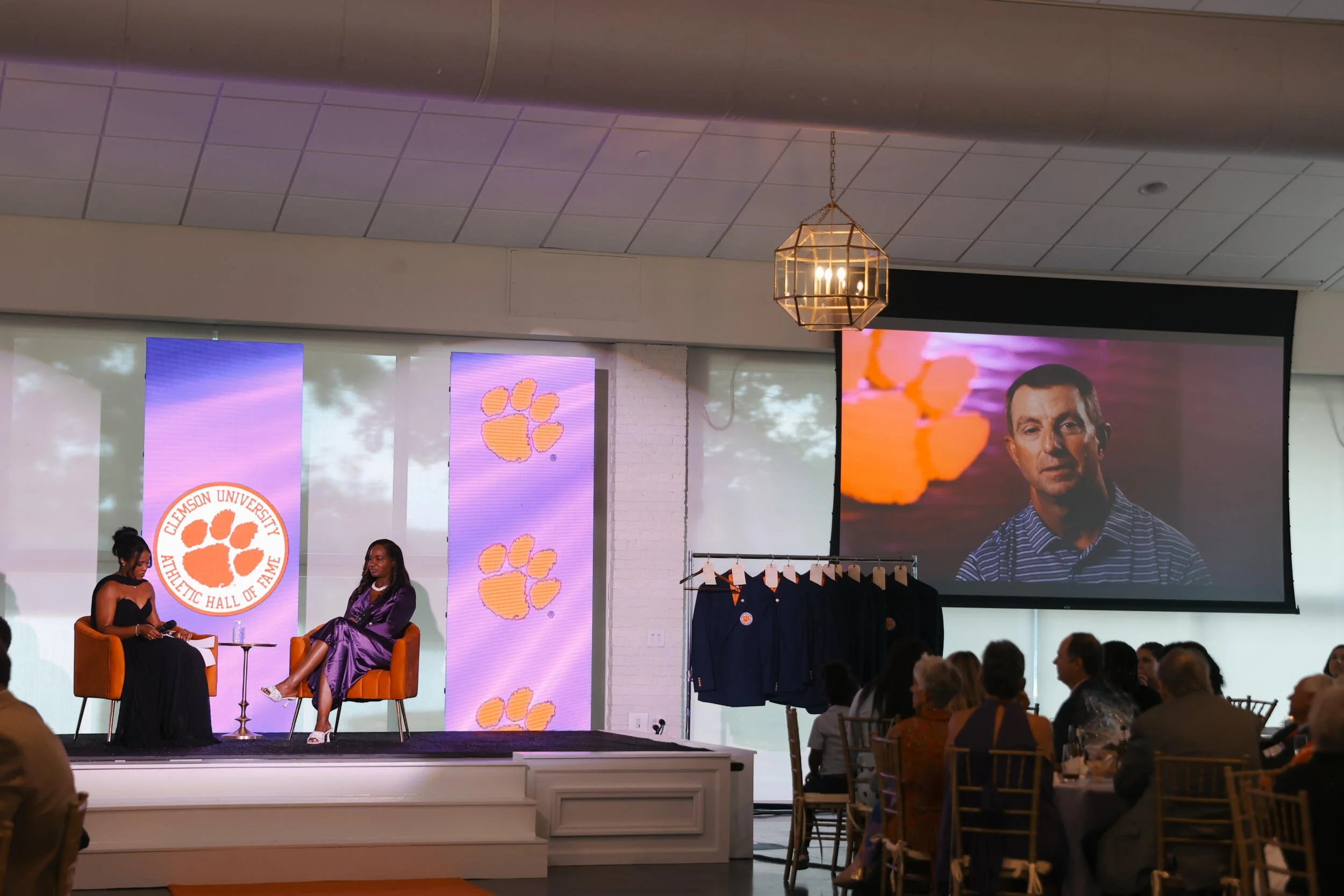
Rather than producing lengthy individual documentaries, Rettew Creative developed short testimonial segments that complemented live conversations with each inductee.
These recorded interviews featured perspectives from coaches, former teammates, peers, friends, family members, and others whose relationships helped illuminate the inductees' achievements and character.
The interviews offered something beyond statistics, awards, and career highlights. They provided firsthand accounts of perseverance, leadership, friendship, mentorship, and the personal qualities that shaped each inductee's legacy.
As honorees participated in live conversations on stage, carefully selected recorded testimonials added emotional depth and historical context.
The resulting experience combined the immediacy of live storytelling with the intimacy of documentary filmmaking.
It also created an opportunity for each inductee's story to be experienced through the voices of people who knew them personally.
Creating a More Focused Live Experience
A central production objective was to deliver a compelling, engaging program while respecting the time of inductees, families, and guests.
Previous Hall of Fame ceremonies had demonstrated the challenges of lengthy programs. For 2026, the team established an ambitious goal: complete the induction experience in approximately two hours without sacrificing meaningful recognition.
The evening ultimately concluded in approximately one hour and 45 minutes.
Achieving that result required detailed planning, a carefully structured program rundown, clearly defined production responsibilities, and coordinated transitions between live interviews, recorded media, and ceremonial presentations.
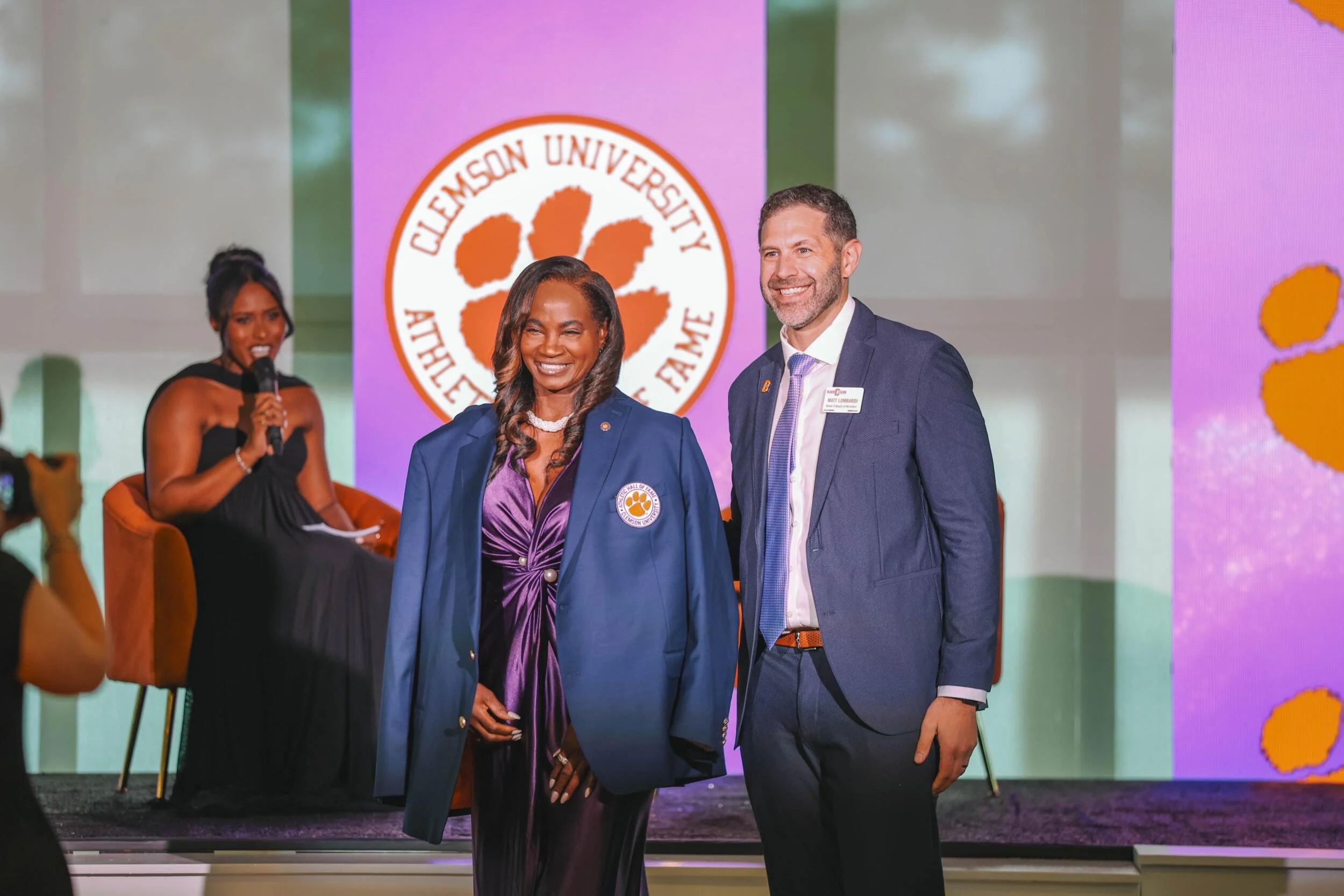
The original class included 11 inductees. When K.J. McDaniels was unable to attend because of a family illness, the program was adjusted to recognize the 10 inductees in attendance, with plans to honor McDaniels at another time.
The production maintained its pacing and continuity while allowing each participating inductee an individual moment of recognition.
With a Clemson football game scheduled for the following day, the shorter program also helped guests enjoy the evening without an unnecessarily extended commitment.
Efficiency did not come at the expense of substance. Instead, it became part of the audience experience.
Collaboration Behind the Scenes
The success of the evening reflected months of collaborative planning among Clemson Athletics, the Block C Club, Rettew Creative, and the event's production partner Aspire4More Productions.
For Mandy Teske, the Clemson Athletics representative managing the event, 2026 represented her first year carrying primary responsibility for the ceremony.
That made detailed preparation especially important.
The production team established clear responsibilities, developed a comprehensive show rundown, coordinated technical requirements, and addressed potential challenges well before guests arrived.
This preparation created a calmer, more organized event day, allowing Mandy to manage the experience without having to oversee every operational detail personally.
The production was designed not only around the audience and inductees, but also around the people responsible for delivering the event.
The strength of the collaboration was visible in the final experience, even when the planning behind it was not.
The Outcome: A Celebration Worth Remembering
The 2026 Clemson Athletic Hall of Fame demonstrated how thoughtful production design and authentic storytelling can elevate a traditional recognition event.
The evening successfully integrated a new venue, a new audiovisual production team, a more formal environment, documentary testimonials, and live conversations into a cohesive program lasting approximately one hour and 45 minutes.
Feedback from Block C Club leadership and attendees was particularly meaningful. Several longtime participants described the evening as the best Clemson Athletic Hall of Fame ceremony they had experienced.
For Rettew Creative, the most significant outcome was not simply the praise or the successful execution of the program.
It was the opportunity to create an experience where production decisions became almost invisible, allowing the people, their stories, and their accomplishments to remain the focus.
The evening reinforced a principle that guides our work: great storytelling is not about adding more. It is about knowing what matters, creating space for it, and giving people an opportunity to experience it together.
